Items filtered by date: June 2020
Does My Child Have an Ingrown Toenail?
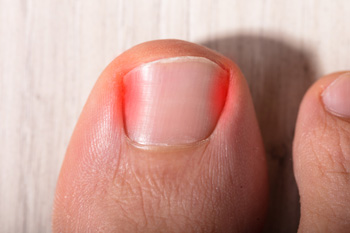 Common symptoms of ingrown toenails are redness and tenderness surrounding the edges of the nail. If your child complains of toenail pain, it may be indicative of an ingrown toenail. Additionally, there may be a discharge oozing if the nail has become infected, and it may cause severe pain and discomfort. This condition can be the result of trimming the toenails improperly, or from wearing shoes that do not have adequate room for the toes to move freely in. It may feel better when your child soaks the affected toe in warm water, as this may help to soften the skin. If you or your child has an ingrown toenail, it is suggested that you consult with a podiatrist who can offer the best treatment options.
Ingrown toenails may initially present themselves as a minor discomfort, but they may progress into an infection in the skin without proper treatment. For more information about ingrown toenails, contact one of our podiatrists of Crosstown Podiatry. Our doctors can provide the care you need to keep you pain-free and on your feet.
Ingrown Toenails
Ingrown toenails are caused when the corner or side of a toenail grows into the soft flesh surrounding it. They often result in redness, swelling, pain, and in some cases, infection. This condition typically affects the big toe and may recur if it is not treated properly.
Causes
- Improper toenail trimming
- Genetics
- Improper shoe fitting
- Injury from pedicures or nail picking
- Abnormal gait
- Poor hygiene
You are more likely to develop an ingrown toenail if you are obese, have diabetes, arthritis, or have any fungal infection in your nails. Additionally, people who have foot or toe deformities are at a higher risk of developing an ingrown toenail.
Symptoms
Some symptoms of ingrown toenails are redness, swelling, and pain. In rare cases, there may be a yellowish drainage coming from the nail.
Treatment
Ignoring an ingrown toenail can have serious complications. Infections of the nail border can progress to a deeper soft-tissue infection, which can then turn into a bone infection. You should always speak with your podiatrist if you suspect you have an ingrown toenail, especially if you have diabetes or poor circulation.
If you have any questions, please feel free to contact our offices located in Wayne, Montclair, and Randolph, NJ . We offer the newest diagnostic and treatment technologies for all your foot care needs.
Plantar Warts Are Caused by a Virus
 Plantar warts develop on the bottom of the feet. They grow into the sole of the foot as pressure is endured from walking during the day, and can cause severe pain and discomfort. They appear as small, hardened areas, and may have black dots in the center. These develop as a result of blood vessels that grow inside the wart. Plantar warts are caused by a virus that lives and thrives in warm and moist environments. These types of places can include public swimming pools, shower room floors, and locker rooms. Patients who have a weakened immune system may be prone to getting plantar warts, in addition to people who have a history of developing this type of wart. It is suggested that you speak to a podiatrist if you have a plantar wart, who can determine what the best course of treatment is for you.
Plantar warts can be very uncomfortable. If you need your feet checked, contact one of our podiatrists from Crosstown Podiatry. Our doctors will assist you with all of your foot and ankle needs.
About Plantar Warts
Plantar warts are the result of HPV, or human papillomavirus, getting into open wounds on the feet. They are mostly found on the heels or balls of the feet.
While plantar warts are generally harmless, those experiencing excessive pain or those suffering from diabetes or a compromised immune system require immediate medical care. Plantar warts are easily diagnosed, usually through scraping off a bit of rough skin or by getting a biopsy.
Symptoms
- Lesions on the bottom of your feet, usually rough and grainy
- Hard or thick callused spots
- Wart seeds, which are small clotted blood vessels that look like little black spots
- Pain, discomfort, or tenderness of your feet when walking or standing
Treatment
- Freezing
- Electric tool removal
- Laser Treatment
- Topical Creams (prescription only)
- Over-the-counter medications
To help prevent developing plantar warts, avoid walking barefoot over abrasive surfaces that can cause cuts or wounds for HPV to get into. Avoiding direct contact with other warts, as well as not picking or rubbing existing warts, can help prevent the further spread of plantar warts. However, if you think you have developed plantar warts, speak to your podiatrist. He or she can diagnose the warts on your feet and recommend the appropriate treatment options.
If you have any questions, please feel free to contact our offices located in Wayne, Montclair, and Randolph, NJ . We offer the newest diagnostic and treatment technologies for all your foot care needs.
Heel Pain Can Be Treated!

Do you suffer from heel pain when you get up in the morning? If so, you should seek professional help and have a proper diagnosis performed. Heel pain can be caused by several different foot-related conditions.
Location of Pain Caused by Morton’s Neuroma
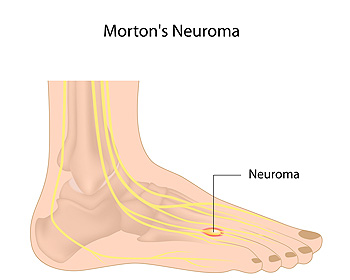
A nerve tissue that has become thickened is referred to as a neuroma. If the tissue that is found between the toes near the ball of the foot becomes inflamed, it is a condition that is known as Morton’s neuroma. It can happen as a result of wearing shoes that are too narrow, or from participating in sporting activities where pressure is placed on the front of the foot. Additionally, it may develop from existing foot deformities that can include flat feet and bunions. A noticeable symptom that patients could have is a burning pain on the sole of the foot, which may travel to the toes. Mild relief may be found when orthotics are worn, and this may give the affected foot the support that is needed as the pressure is reduced. It can be beneficial to avoid wearing high heels, and choosing to wear shoes that are wider in the toe area may be more comfortable. If you have a sharp pain on the bottom of your foot, it is suggested that you speak with a podiatrist who can properly diagnose and treat Morton’s neuroma.
Morton’s neuroma is a very uncomfortable condition to live with. If you think you have Morton’s neuroma, contact one of our podiatrists of Crosstown Podiatry. Our doctors will attend to all of your foot care needs and answer any of your related questions.
Morton’s Neuroma
Morton's neuroma is a painful foot condition that commonly affects the areas between the second and third or third and fourth toe, although other areas of the foot are also susceptible. Morton’s neuroma is caused by an inflamed nerve in the foot that is being squeezed and aggravated by surrounding bones.
What Increases the Chances of Having Morton’s Neuroma?
- Ill-fitting high heels or shoes that add pressure to the toe or foot
- Jogging, running or any sport that involves constant impact to the foot
- Flat feet, bunions, and any other foot deformities
Morton’s neuroma is a very treatable condition. Orthotics and shoe inserts can often be used to alleviate the pain on the forefront of the feet. In more severe cases, corticosteroids can also be prescribed. In order to figure out the best treatment for your neuroma, it’s recommended to seek the care of a podiatrist who can diagnose your condition and provide different treatment options.
If you have any questions, please feel free to contact our offices located in Wayne, Montclair, and Randolph, NJ . We offer the newest diagnostic and treatment technologies for all your foot care needs.
How Do You Know If You Have Developed Athlete’s Foot?
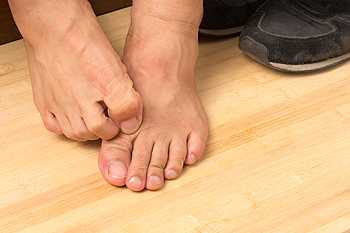 Athlete’s foot is a contagious condition, and as its name suggests, is often common among those who participate in sporting activities. Athlete’s foot can be identified by a few different symptoms. These indicators may include cracking or peeling blisters between the toes, redness and scaling on the soles of the feet, rashes and bumps on the feet, and itchiness. Even though the name is athlete’s foot, this condition can develop for anyone. Not wearing the proper footwear in warm and moist environments can lead to developing athlete's foot, as that is where fungi tend to thrive. These environments can include public swimming pools, communal showers, gyms, and locker room floors. If you believe you have developed athlete’s foot, it is suggested that you seek the help of a podiatrist for proper and professional care.
Athlete’s foot is an inconvenient condition that can be easily reduced with the proper treatment. If you have any concerns about your feet and ankles, contact one of our podiatrists from Crosstown Podiatry. Our doctors will treat your foot and ankle needs.
Athlete’s Foot: The Sole Story
Athlete's foot, also known as tinea pedis, can be an extremely contagious foot infection. It is commonly contracted in public changing areas and bathrooms, dormitory style living quarters, around locker rooms and public swimming pools, or anywhere your feet often come into contact with other people.
Solutions to Combat Athlete’s Foot
- Hydrate your feet by using lotion
- Exfoliate
- Buff off nails
- Use of anti-fungal products
- Examine your feet and visit your doctor if any suspicious blisters or cuts develop
Athlete’s foot can cause many irritating symptoms such as dry and flaking skin, itching, and redness. Some more severe symptoms can include bleeding and cracked skin, intense itching and burning, and even pain when walking. In the worst cases, Athlete’s foot can cause blistering as well. Speak to your podiatrist for a better understanding of the different causes of Athlete’s foot, as well as help in determining which treatment options are best for you.
If you have any questions please feel free to contact our offices located in Wayne, Montclair, and Randolph, NJ . We offer the newest diagnostic and treatment technologies for all your foot and ankle needs.
Are Foot Massages Effective?
 An effective type of foot therapy is a massage. Many patients enjoy the benefits of receiving regular foot massages and are able to observe the benefits it can have on their general health. Certain types of foot pain may be relieved when the feet are gently squeezed, and muscles are stimulated. Muscle spasms may be diminished when pressure is repeatedly exerted on the surrounding tendons and ligaments. Research has indicated blood pressure may be lowered and circulation can improve when frequent foot massages are received. If you would like to learn about additional forms of effective foot therapies, please consult with a podiatrist.
Foot therapy is often necessary for those recovering from either foot deformities or foot injuries. If you have concerns regarding therapy, consult with one of our podiatrists from Crosstown Podiatry. Our doctors can provide the care you need to keep you pain-free and on your feet.
Most Common Injuries
People who are active or athletes are prone to a variety of injuries. Therefore, it is often important to take part in physical therapy in order to quickly get back on the right track.
What to Do When Injured
Physical Therapy – This specialized treatment will focus on the affected area, speeding up recovery and the overall healing process. It is a proven method that has helped millions of people return from any injury.
During physical therapy you will undergo regimented training to get back into full form. Training is often very difficult, especially at first when the foot feels weak. Physical therapy often involves:
Basic stretching and twisting exercises – getting the feet’s mobility and flexibility up.
Massaging – the therapist will massage the injured area in order to activate the muscles and relax them.
Strengthening Exercises – this allows the muscles in the affected area to regain their full strength, a vital step towards full recovery.
If you have any questions, please feel free to contact our offices located in Wayne, Montclair, and Randolph, NJ . We offer the newest diagnostic and treatment technologies for all your foot care needs.
