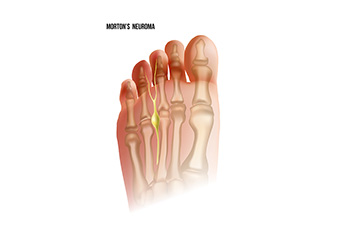
Morton’s neuroma is a condition that affects the nerves in the forefoot, leading to pain and discomfort during daily activities. It develops when the tissue around a nerve becomes thickened due to repeated irritation or pressure. This commonly occurs in the area between the toes, where the nerve is more vulnerable to compression. Although the condition is not dangerous, it can significantly impact walking and overall foot function.
Common symptoms include pain in the ball of the foot that may feel sharp or burning in nature. Some individuals report a sensation of standing on a small object, often described as a pebble in the shoe. Numbness or tingling in the toes may also be present, along with stiffness in the morning that gradually improves throughout the day. These symptoms are often aggravated by activity or by wearing shoes that do not provide enough space or support.
Several factors can increase the risk of developing Morton’s neuroma. Repetitive stress from high-impact activities can irritate the nerve, while tight or narrow shoes can compress the forefoot. High-heeled footwear shifts body weight forward, adding pressure to the affected area. Structural foot issues, such as bunions or abnormal arches, can also contribute to uneven pressure distribution and increase the likelihood of nerve irritation.
Understanding the causes and symptoms of Morton’s neuroma is essential for early intervention and effective care. Taking steps to reduce pressure on the forefoot can improve comfort and prevent worsening symptoms. Seeking a podiatrist's evaluation can help determine the best course of treatment. If you have any of the above symptoms, it is suggested that you consult a podiatrist for an accurate diagnosis and appropriate treatment plan.
Morton’s neuroma is a very uncomfortable condition to live with. If you think you have Morton’s neuroma, contact Frank Colabella, DPM of Crosstown Podiatry. Our doctor will attend to all of your foot care needs and answer any of your related questions.
Morton’s Neuroma
Morton's neuroma is a painful foot condition that commonly affects the areas between the second and third or third and fourth toe, although other areas of the foot are also susceptible. Morton’s neuroma is caused by an inflamed nerve in the foot that is being squeezed and aggravated by surrounding bones.
What Increases the Chances of Having Morton’s Neuroma?
- Ill-fitting high heels or shoes that add pressure to the toe or foot
- Jogging, running or any sport that involves constant impact to the foot
- Flat feet, bunions, and any other foot deformities
Morton’s neuroma is a very treatable condition. Orthotics and shoe inserts can often be used to alleviate the pain on the forefront of the feet. In more severe cases, corticosteroids can also be prescribed. In order to figure out the best treatment for your neuroma, it’s recommended to seek the care of a podiatrist who can diagnose your condition and provide different treatment options.
If you have any questions, please feel free to contact our offices located in Wayne and Oradell, NJ . We offer the newest diagnostic and treatment technologies for all your foot care needs.

Your feet are covered most of the day. If you're diabetic, periodic screening is important for good health. Numbness is often a sign of diabetic foot and can mask a sore or wound.
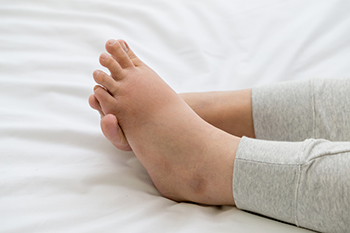
Pregnancy brings many changes to the body, and swelling in the feet and ankles is one that many expectant mothers notice as their pregnancy progresses. Extra fluid naturally builds up in the body, and the growing uterus places pressure on blood flow in the legs. This allows fluid to collect around the ankles and feet. Swelling usually becomes more noticeable later in pregnancy and toward the end of the day. Gradual swelling is usually not harmful to the mother or baby, although it can feel uncomfortable and make walking more difficult. A sudden increase in swelling, especially with a severe headache, vision changes, or pain below the ribs, needs immediate medical attention. This can signal pre-eclampsia, a serious pregnancy-related condition requiring prompt evaluation.
A podiatrist examines swollen feet to confirm that pregnancy-related changes are the cause and to rule out other foot or ankle problems. The evaluation includes checking circulation, skin health, and joint movement. It also includes examining areas of tenderness. A podiatrist looks for changes in foot shape and discusses whether shoes that lack proper support contribute to discomfort. Custom orthotics, which are specially made shoe inserts, can improve foot support when needed. Padding and shoe recommendations can reduce pressure on sensitive areas. A podiatrist also explains safe ways to stay comfortable while protecting foot health throughout pregnancy.
Ignoring persistent swelling or foot pain can make daily activities more difficult and reduce comfort throughout pregnancy. Prompt evaluation helps identify concerns before they become more serious and provides guidance that matches your needs. Early care also supports healthy movement and helps reduce strain on the feet and ankles as the pregnancy continues. Regular evaluations also reassure patients by tracking changes and answering questions while supporting comfortable mobility. If you have discomfort from swollen feet while pregnant, it is suggested that you schedule an appointment with a podiatrist for effective relief and management tips.
Pregnant women with swollen feet can be treated with a variety of different methods that are readily available. For more information about other cures for swollen feet during pregnancy, consult with Frank Colabella, DPM from Crosstown Podiatry. Our doctor will attend to all of your foot and ankle needs.
What Foot Problems Can Arise During Pregnancy?
One problem that can occur is overpronation, which occurs when the arch of the foot flattens and tends to roll inward. This can cause pain and discomfort in your heels while you’re walking or even just standing up, trying to support your baby.
Another problem is edema, or swelling in the extremities. This often affects the feet during pregnancy but tends to occur in the later stages.
How Can I Keep My Feet Healthy During Pregnancy?
- Wearing orthotics can provide extra support for the feet and help distribute weight evenly
- Minimize the amount of time spent walking barefoot
- Wear shoes with good arch support
- Wear shoes that allow for good circulation to the feet
- Elevate feet if you experience swelling
- Massage your feet
- Get regular, light exercise, such as walking, to promote blood circulation to the feet
If you have any questions, please feel free to contact our offices located in Wayne and Oradell, NJ . We offer the newest diagnostic and treatment technologies for all your foot care needs.

A broken ankle is a fracture involving one or more of the bones that form the ankle joint. A fracture is the medical term for a broken bone. These injuries can happen after a fall, a sports accident, or a sudden twist that places too much force on the ankle. Car accidents and other high-impact injuries also can cause broken ankles. Symptoms include severe pain, swelling, bruising, and difficulty while walking or standing. Some patients hear a snapping sound when the injury occurs. Others notice that the ankle looks out of place or cannot support body weight. Prompt evaluation is important because an untreated fracture can affect the alignment and stability of the ankle joint.
A podiatrist performs a detailed examination to determine the location and severity of the fracture. The evaluation includes checking the ankle for swelling, tenderness, and changes in alignment. The podiatrist also asks how the injury occurred and whether the patient can bear weight on the affected foot. Imaging tests, like X-rays or CT scans, provide detailed pictures of the bones and help identify fractures that are difficult to detect during an examination. A CT scan combines multiple X-ray images to create detailed cross-sectional views of the ankle. An accurate diagnosis allows the podiatrist to choose the most appropriate treatment and monitor healing throughout recovery. Early care also helps reduce the risk of long-term joint problems.
Treatment depends on the type of fracture and whether the bones remain in proper alignment. A podiatrist develops a treatment plan that protects the ankle while promoting healthy healing. Care includes a cast, a walking boot, or another device that keeps the bones stable. Regular follow-up visits help monitor healing and determine when normal activities can safely resume. Patients with severe fractures or bones that have shifted out of position can benefit from surgery to restore proper alignment. If you have symptoms of a broken ankle, it is suggested that you schedule an appointment with a podiatrist for diagnosis and treatment.
Broken ankles need immediate treatment. If you are seeking treatment, contact Frank Colabella, DPM from Crosstown Podiatry. Our doctor can provide the care you need to keep you pain-free and on your feet.
Broken Ankles
A broken ankle is experienced when a person fractures their tibia or fibula in the lower leg and ankle area. Both of these bones are attached at the bottom of the leg and combine to form what we know to be our ankle.
When a physician is referring to a break of the ankle, he or she is usually referring to a break in the area where the tibia and fibula are joined to create our ankle joint. Ankles are more prone to fractures because the ankle is an area that suffers a lot of pressure and stress. There are some obvious signs when a person experiences a fractured ankle, and the following symptoms may be present.
Symptoms of a Fractured Ankle
- Excessive pain when the area is touched or when any pressure is placed on the ankle
- Swelling around the area
- Bruising of the area
- Area appears to be deformed
If you suspect an ankle fracture, it is recommended to seek treatment as soon as possible. The sooner you have your podiatrist diagnose the fracture, the quicker you’ll be on the way towards recovery.
If you have any questions, please feel free to contact our offices located in Wayne and Oradell, NJ . We offer the newest diagnostic and treatment technologies for all your foot care needs.
